You don't have to leave Delhi to find a little more wonder. Sometimes you only have to change the way you walk through it.
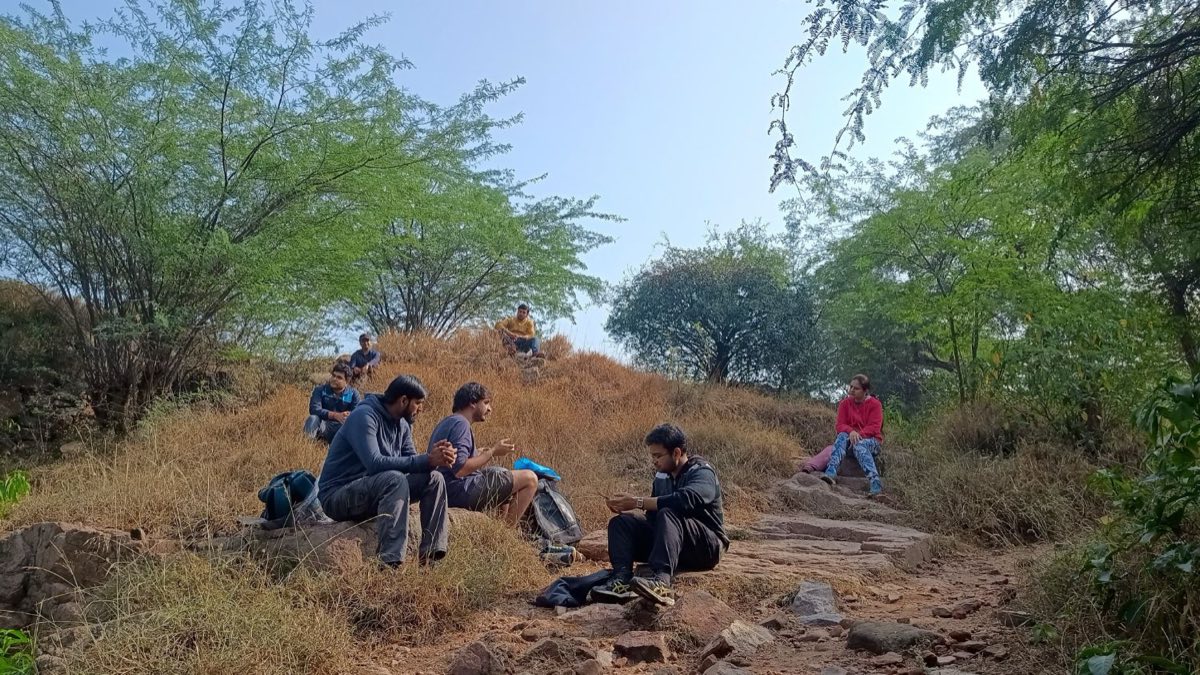
In the Wild is a slow, guided morning in one of the city's forests or gardens. We walk without hurrying, look closely, listen, draw, play a little, and end with live handpan music among the trees, followed by breakfast and conversation.
Nobody needs to know the names of birds or trees, be fit, or be good at art. You only need to be willing to slow down.
From past walks
Notes from the forest floor
A few moments from earlier walks.
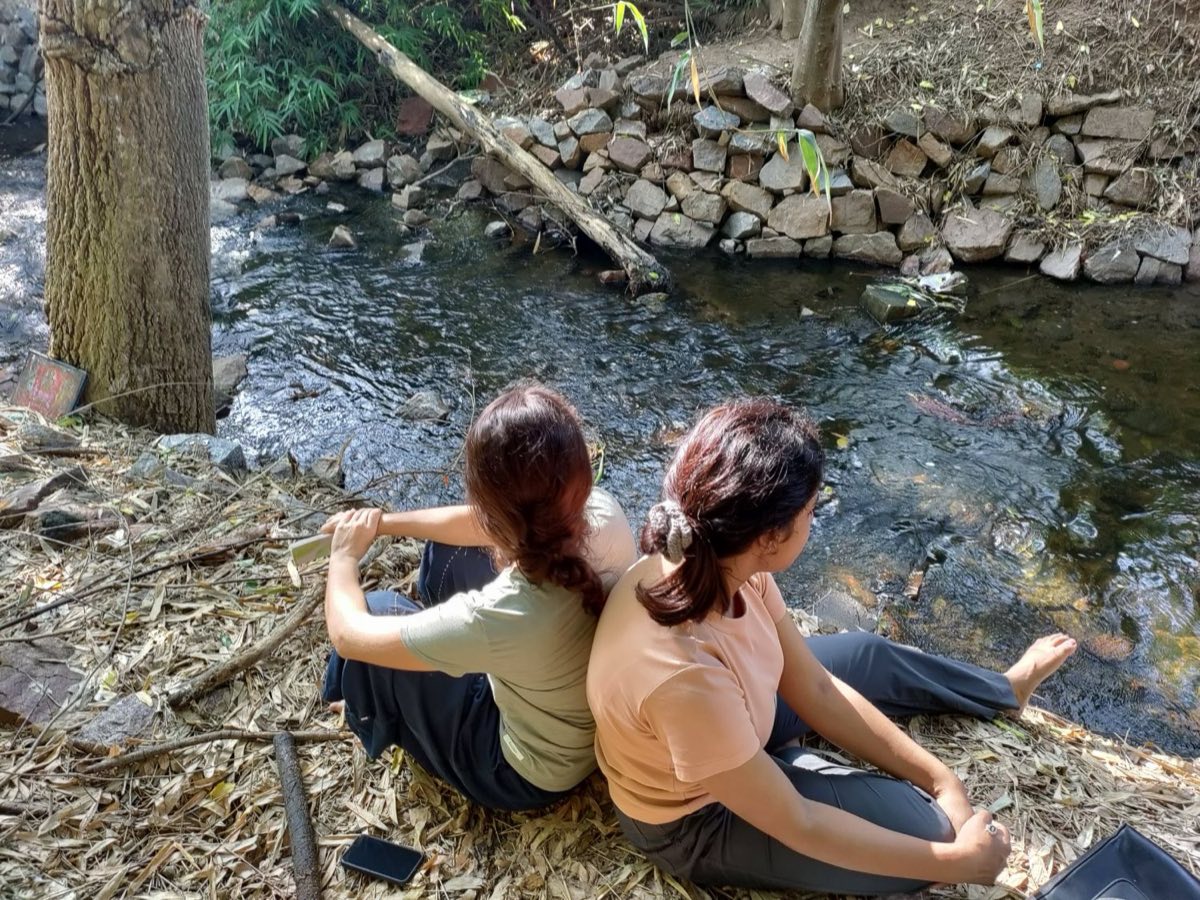
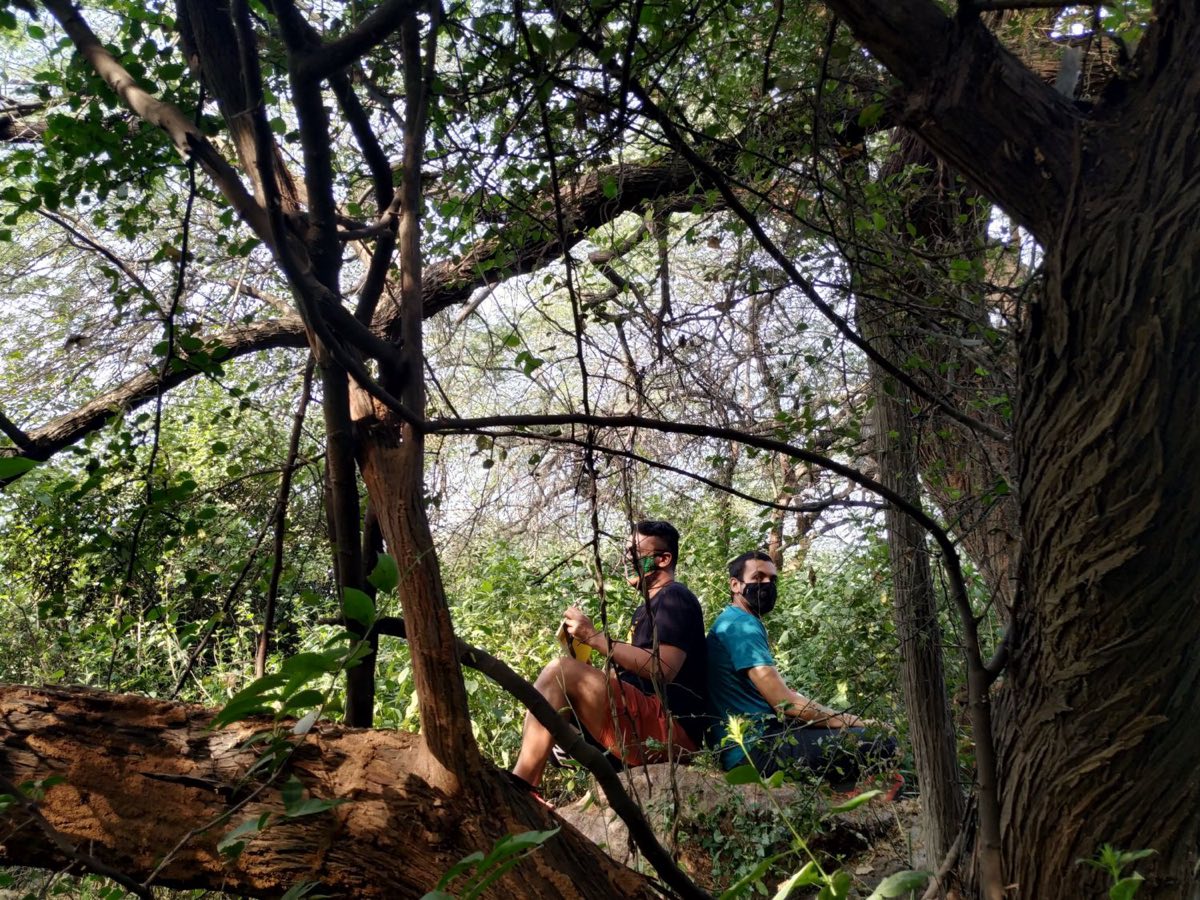
Back to back by the water
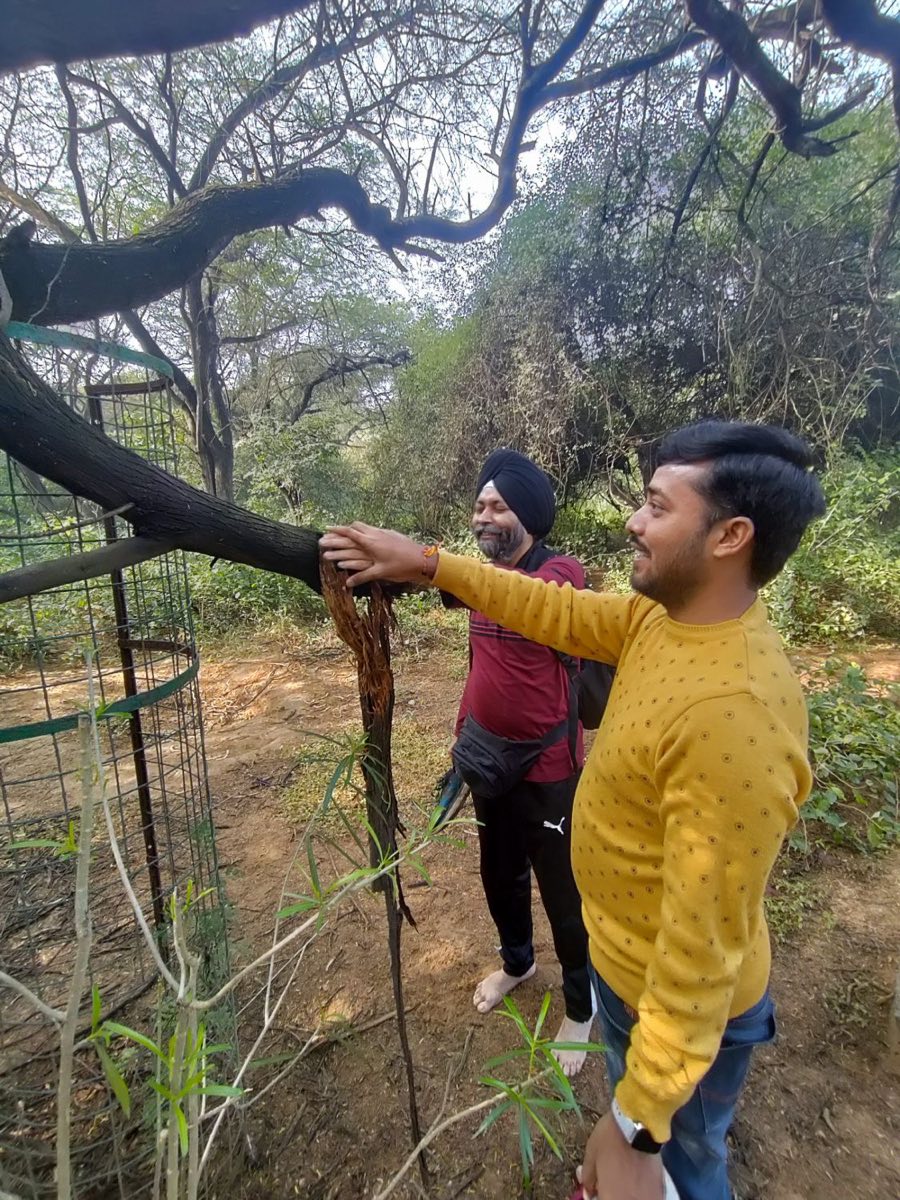
Hands on bark
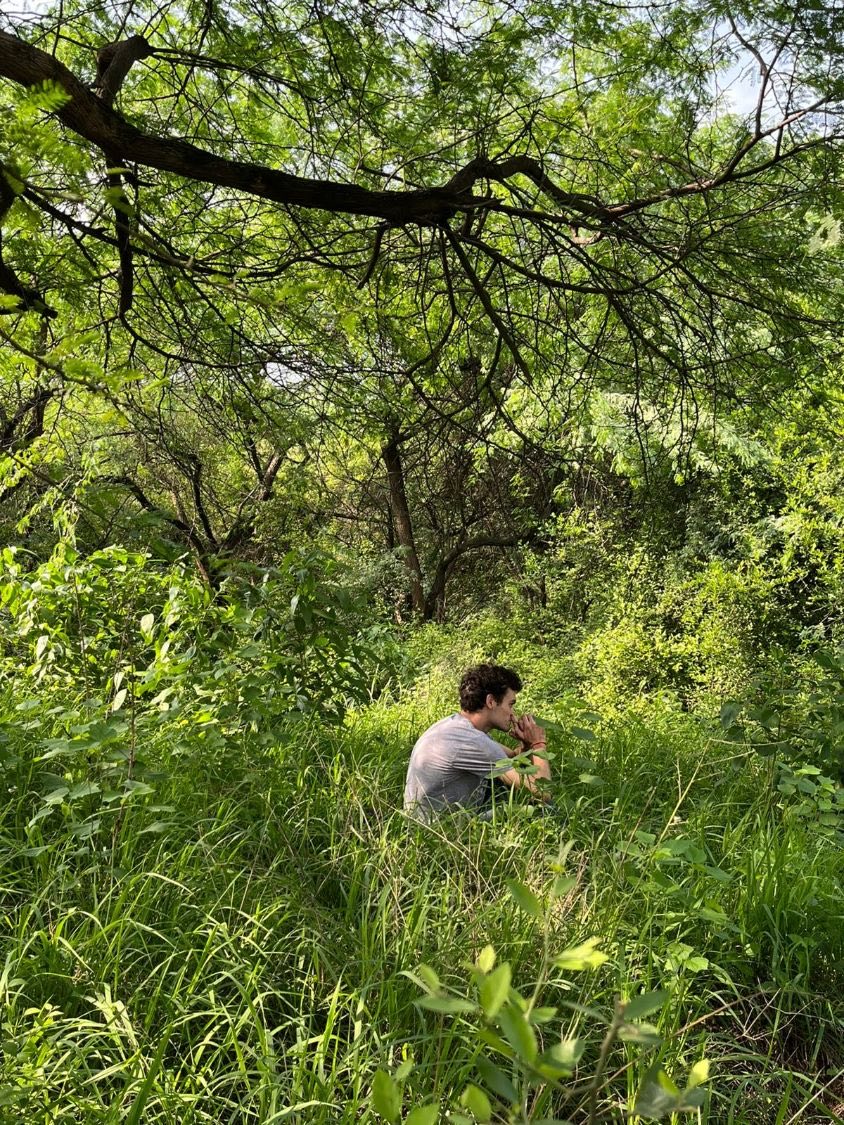
Alone in the long grass
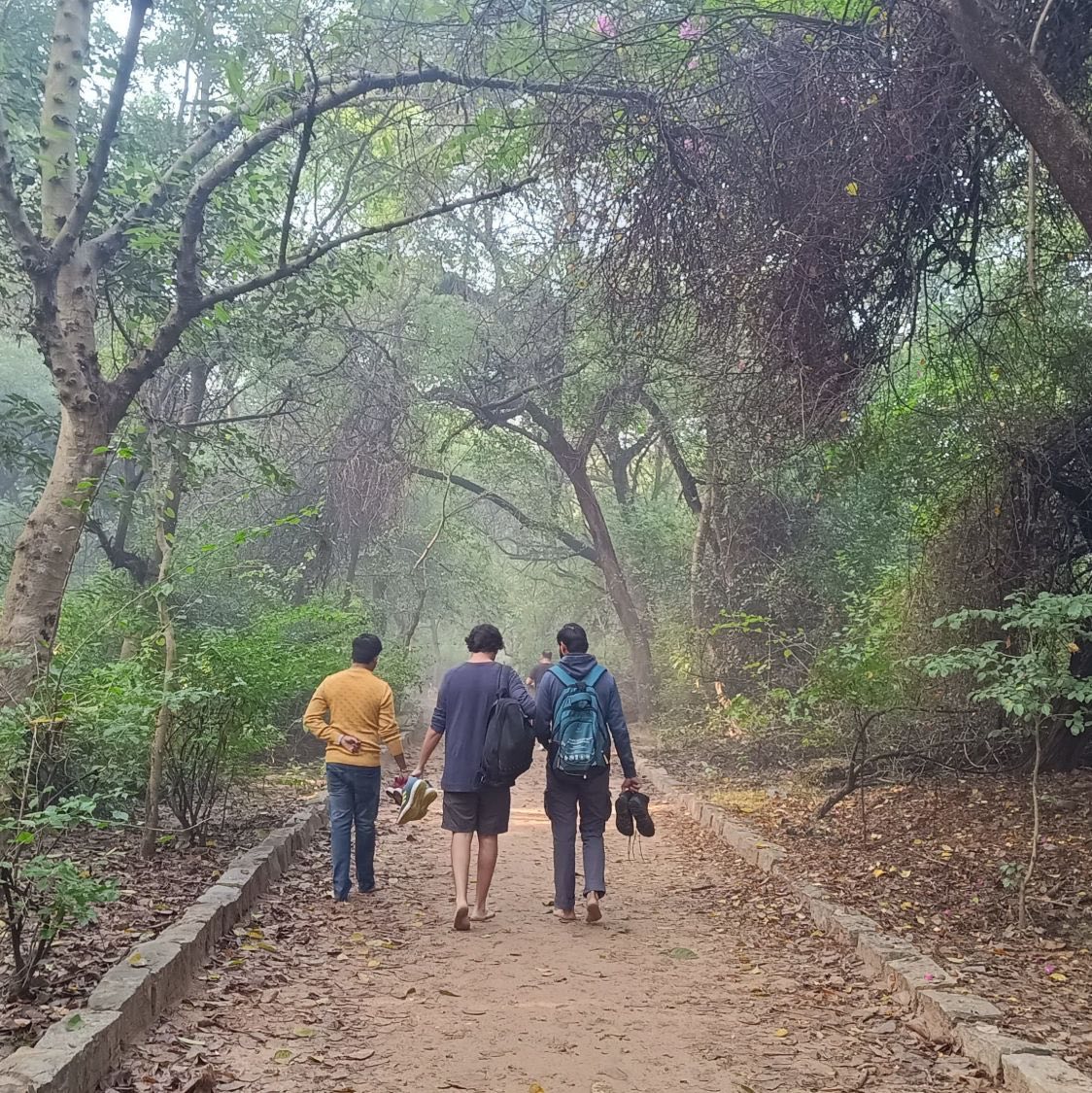
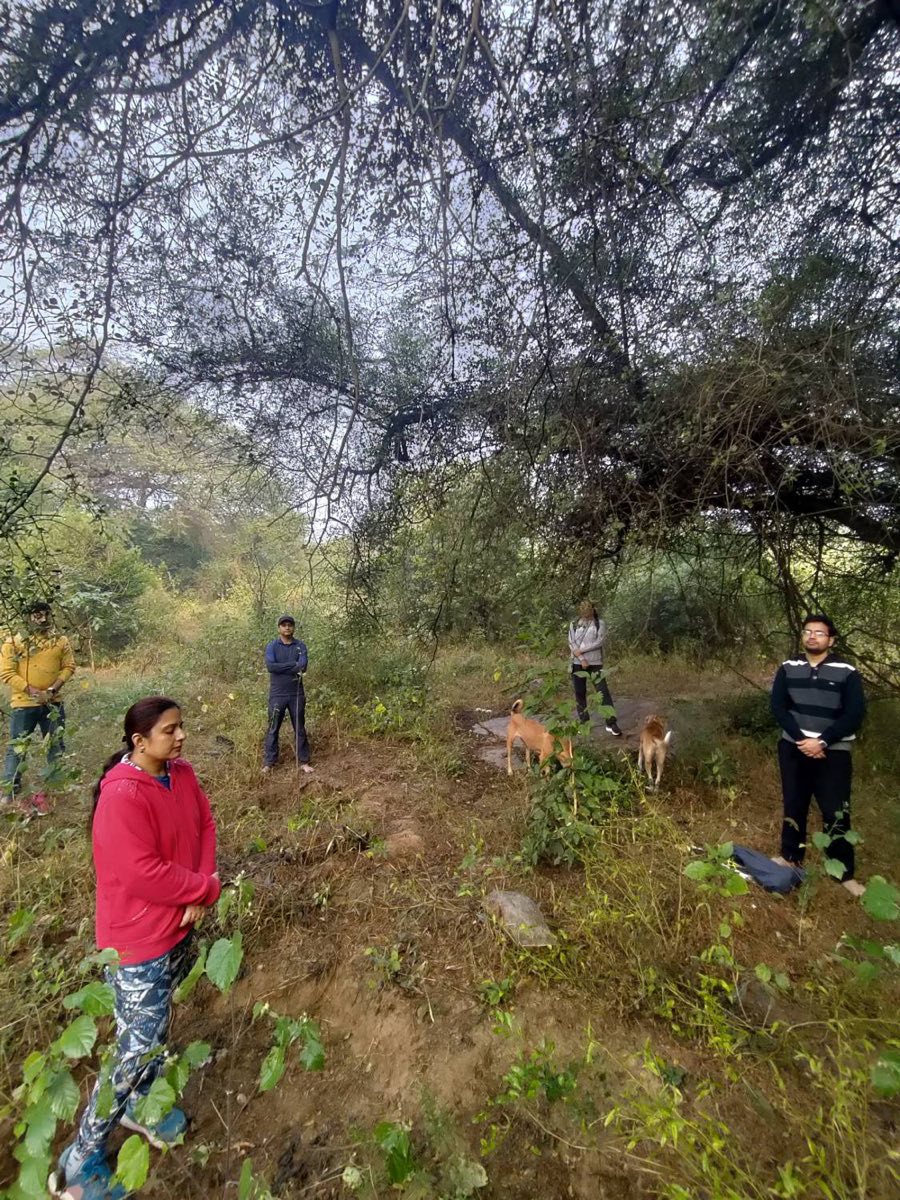
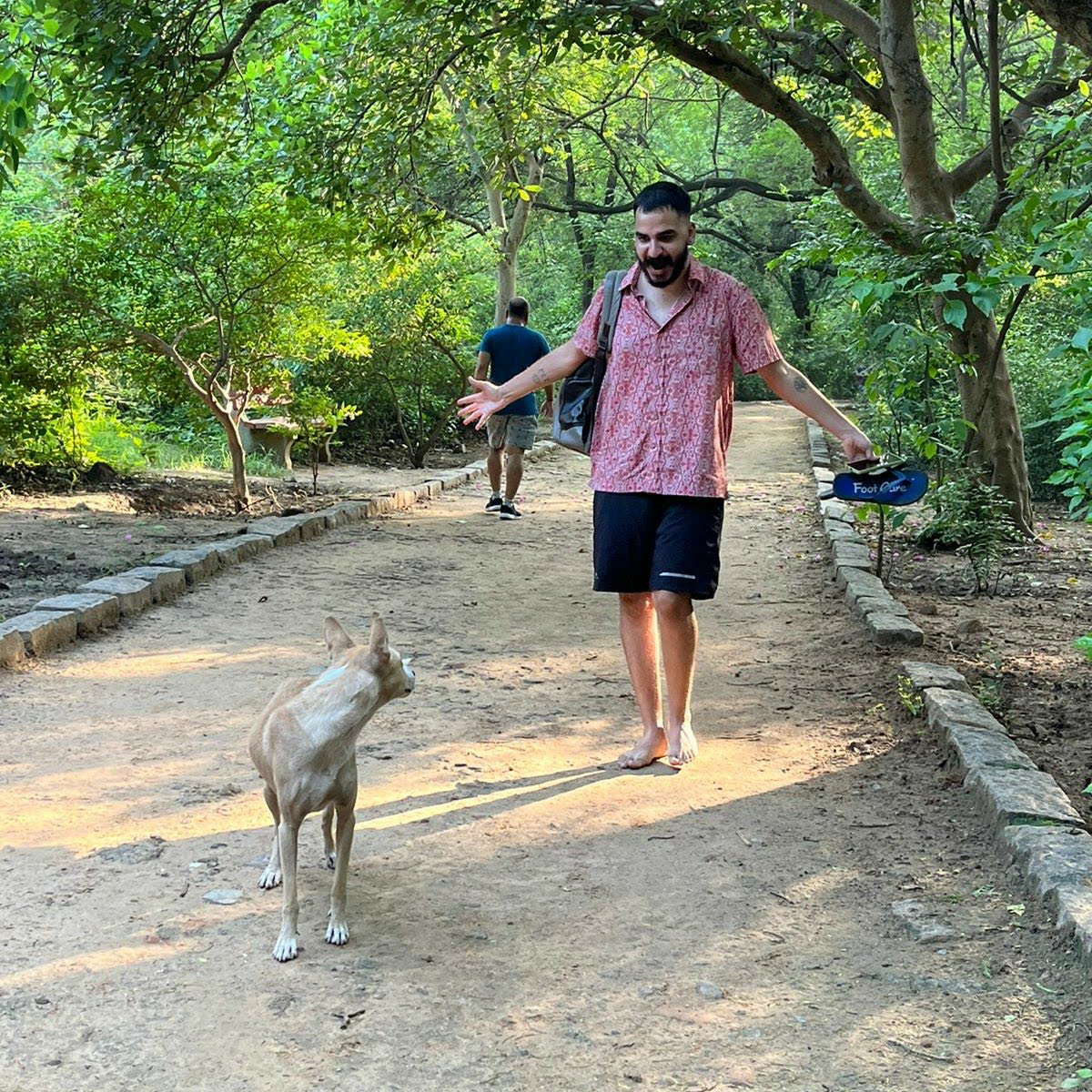
Shoes off on a misty morning
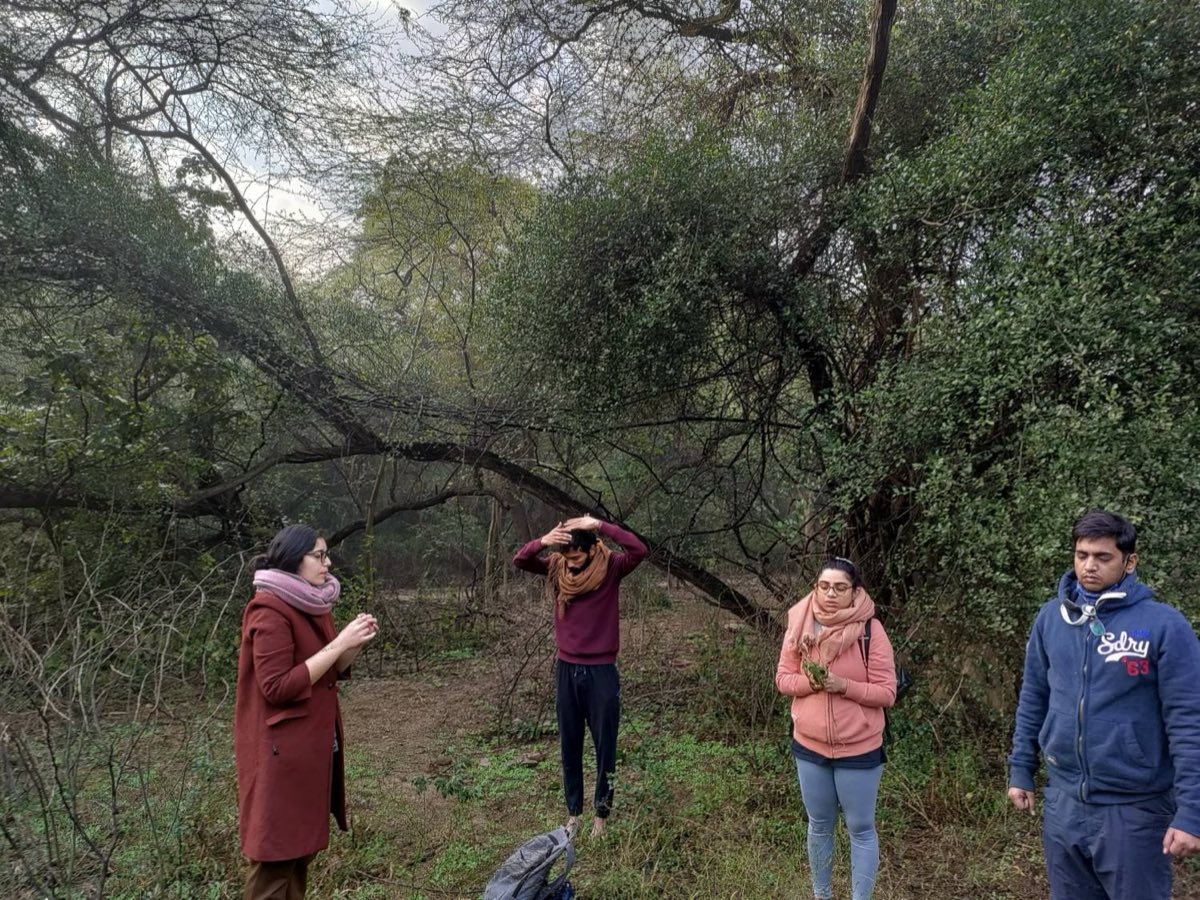
Eyes closed, leaves in hand
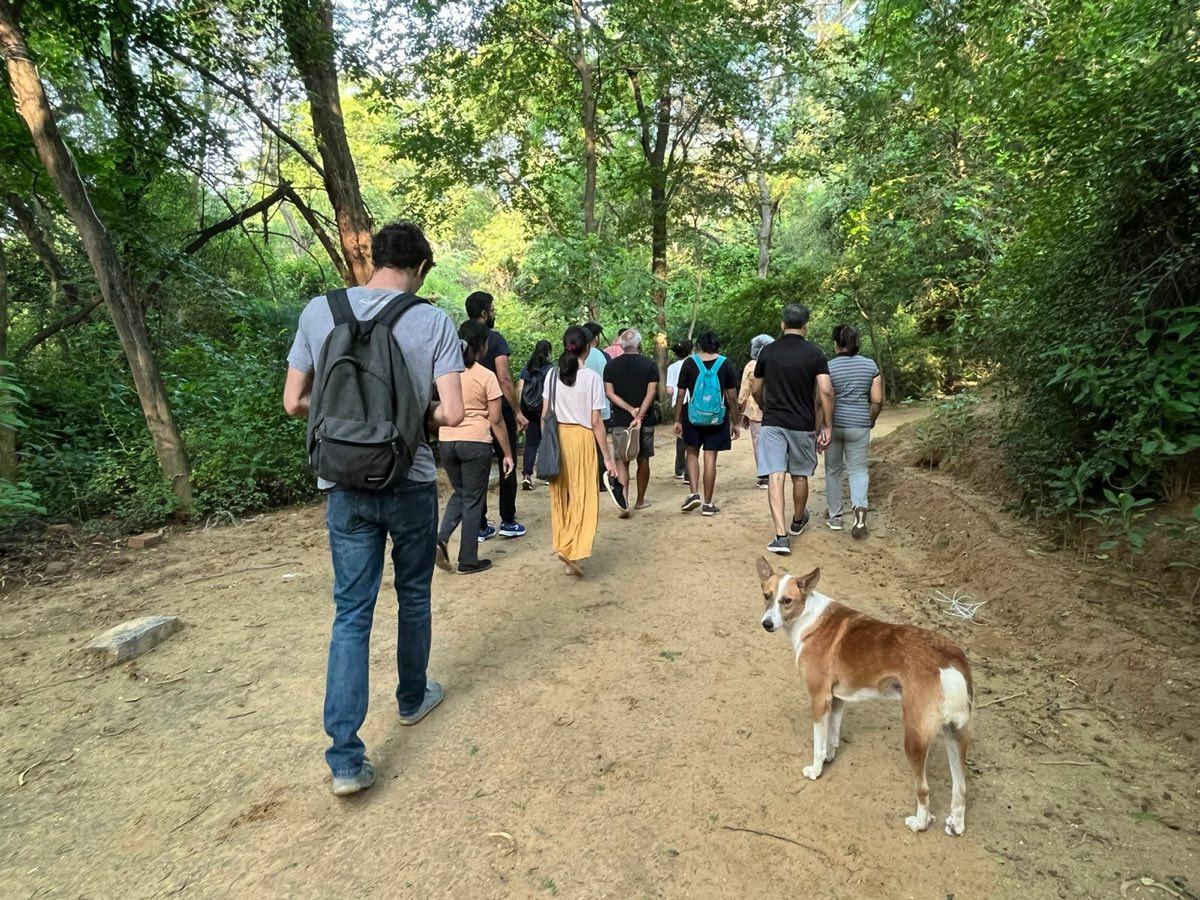
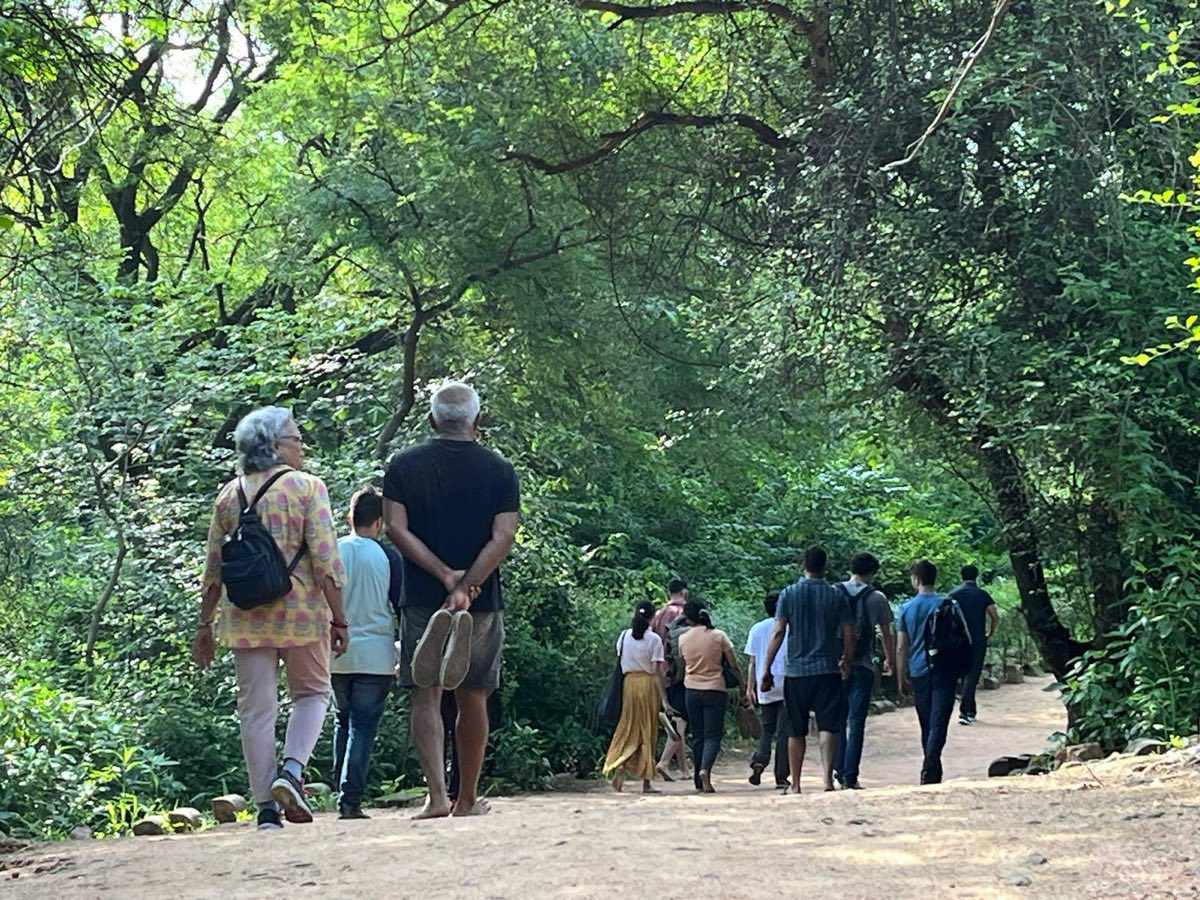
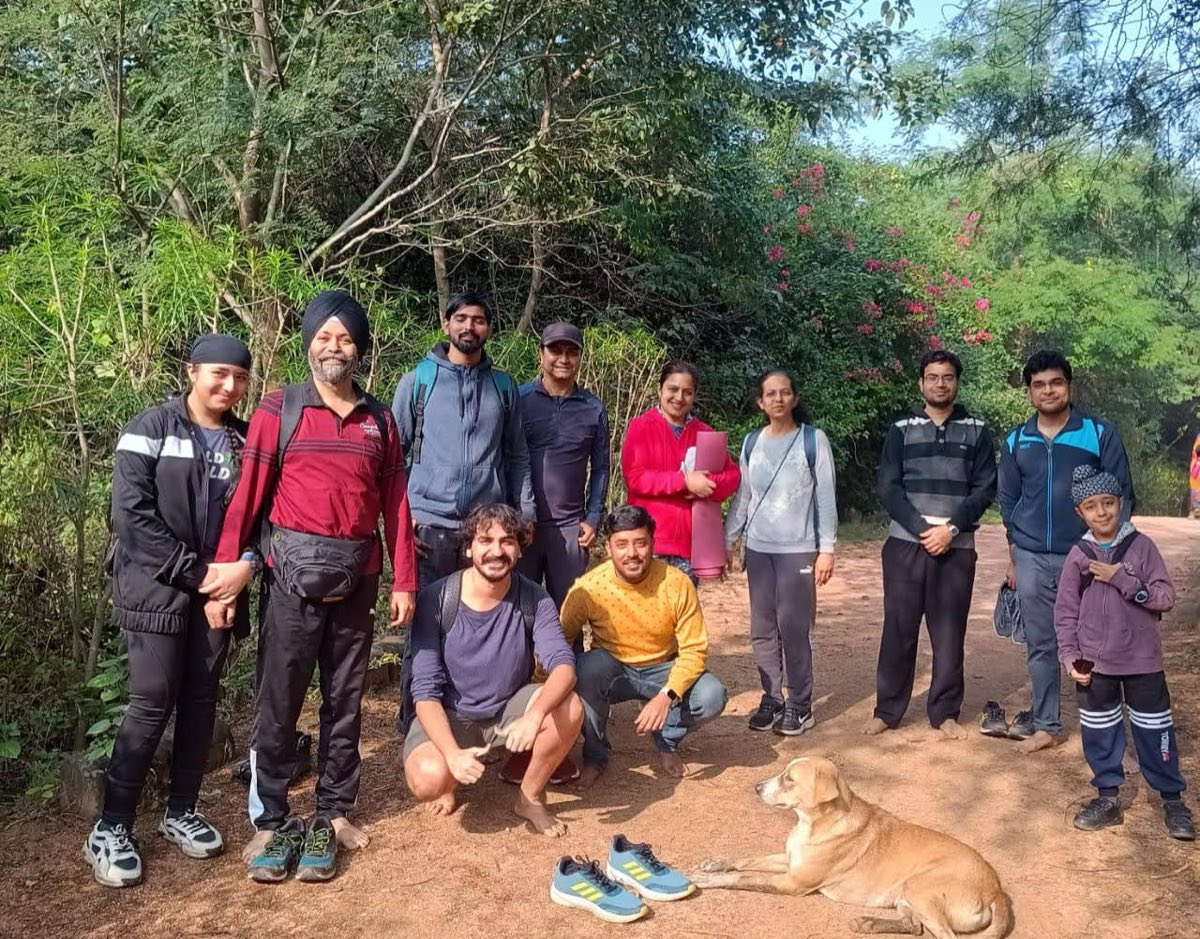
Company on the path
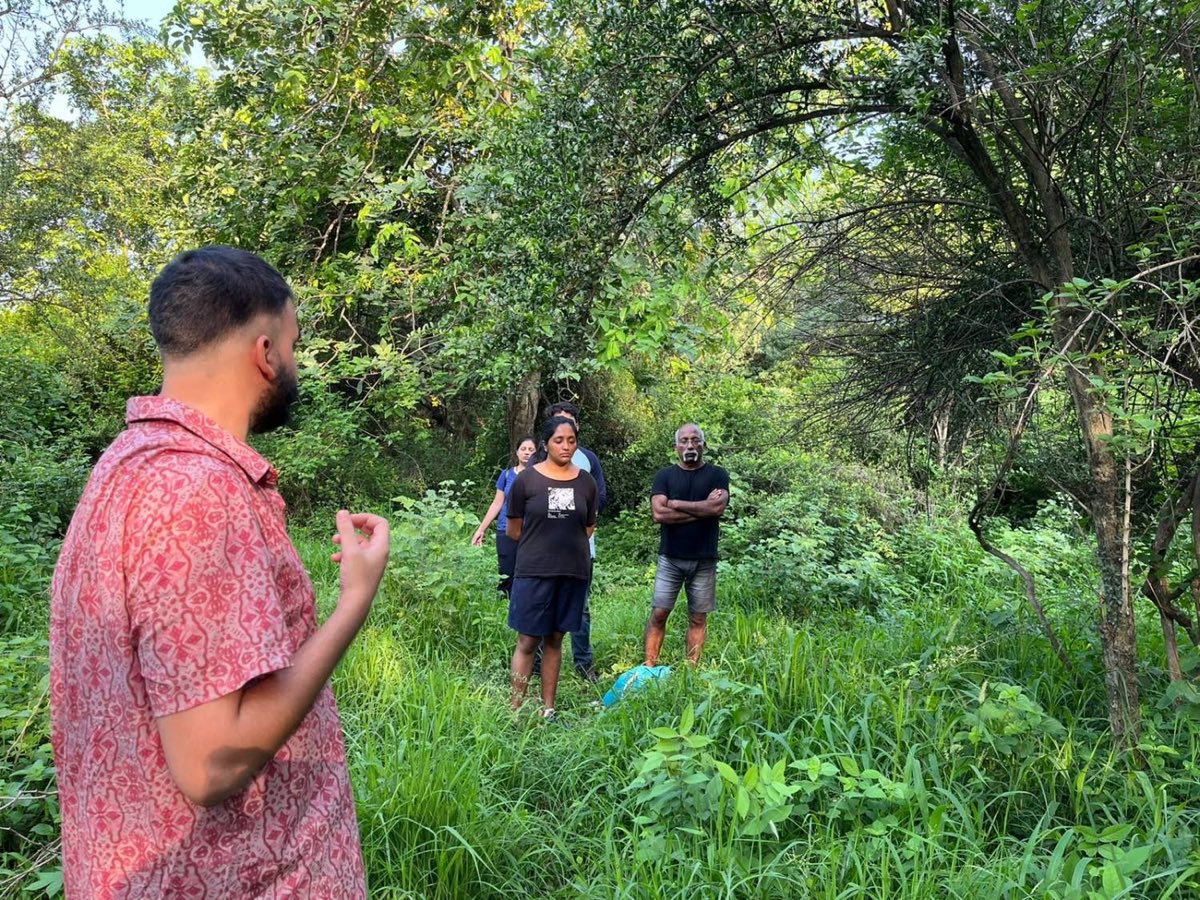
Ashim, before we walk on
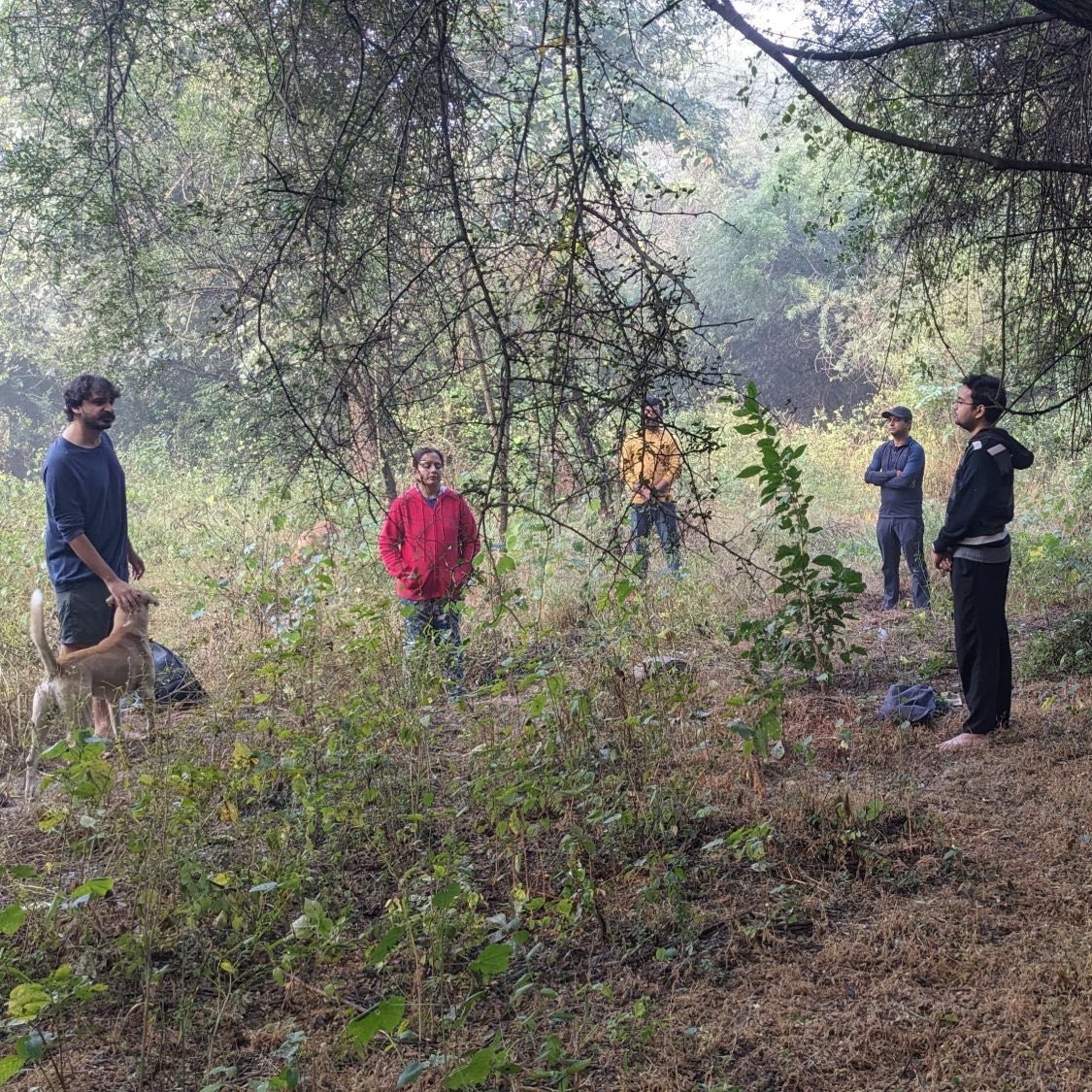
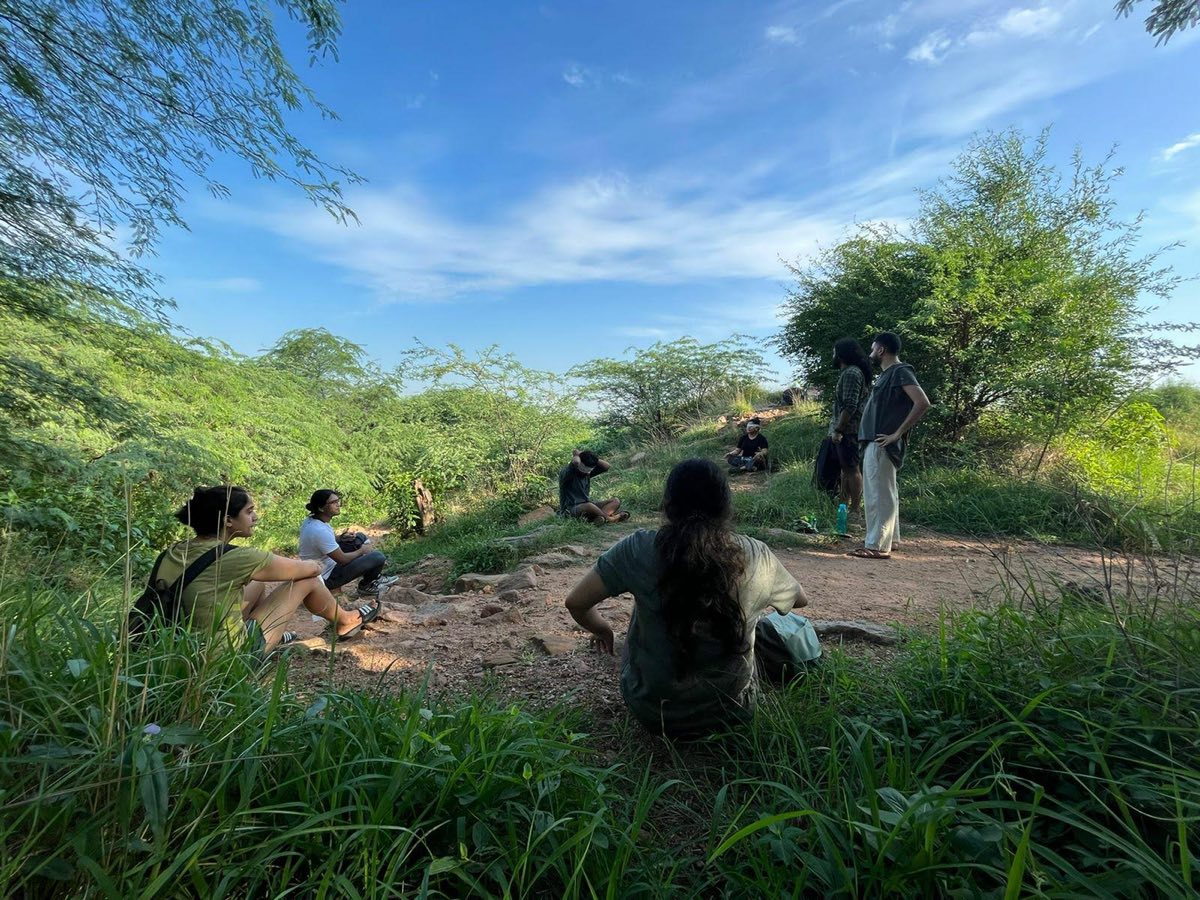
A circle in the winter haze
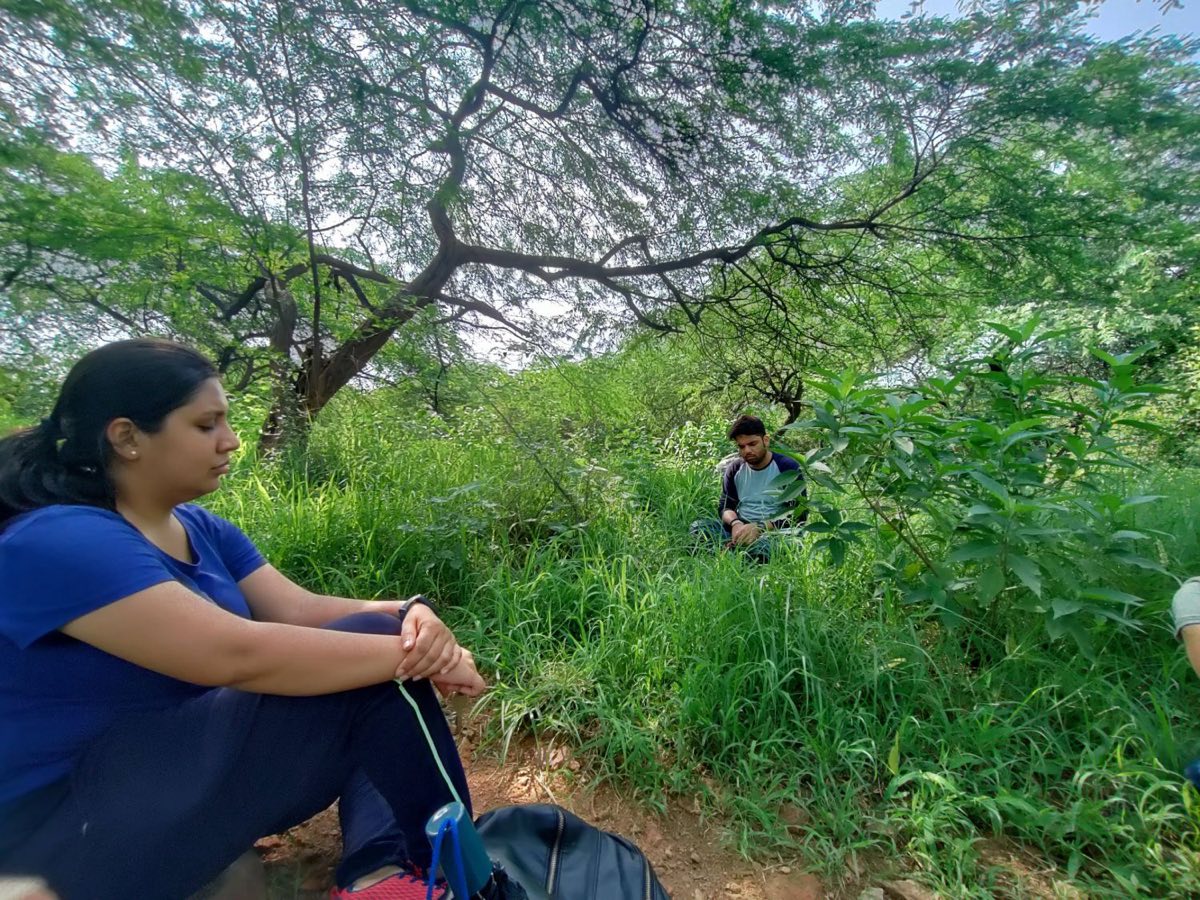
Sitting still
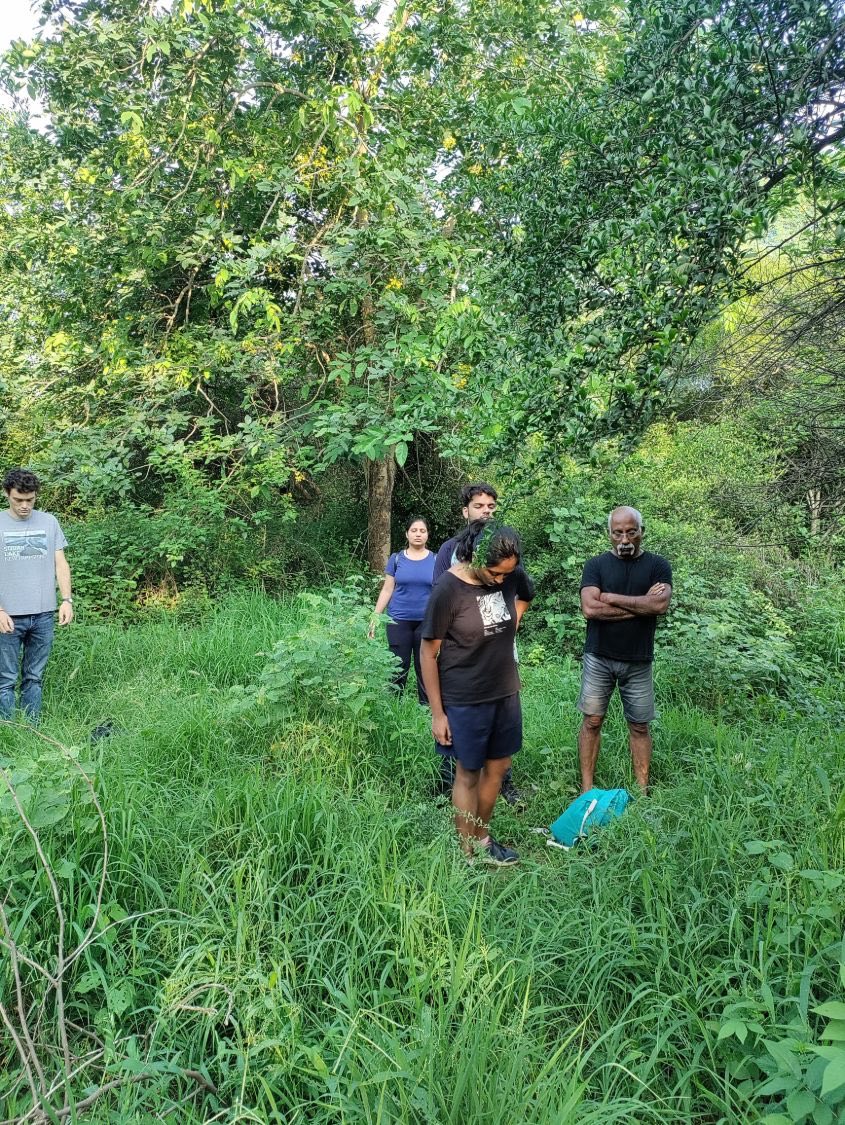
Looking down, looking close
The city's calendar
Delhi tells the time in trees
The same forest is never the same walk twice. Through the year, different trees take their turn, and each season offers something new to notice.
Scroll through the year
Late winter into spring · January – mid-April
Kachnar
Bauhinia variegata
J
F
M
A
M
J
J
A
S
O
N
D
Notice Pink-mauve or white flowers, orchid-like, open on almost bare branches. Look for the leaves later: each is split into two lobes, like a camel's hoof.
Flowers before the leaves
Early summer · Late April – May
Amaltas
Cassia fistula
J
F
M
A
M
J
J
A
S
O
N
D
Notice Long chains of yellow flowers, often on nearly bare branches, hang like lanterns in the heat, and the ground beneath turns gold. The rod-like pods, green turning black, can hang on the tree until the next spring.
The golden shower
High summer · Late April – June
Gulmohar
Delonix regia
J
F
M
A
M
J
J
A
S
O
N
D
Notice A wide, umbrella-shaped canopy fills with scarlet flowers, one petal on each streaked white or yellow. Watch its feathery leaves at dusk: the tiny leaflets fold up.
Flame of the forest canopy
Autumn · Late October – December
Saptparni
Alstonia scholaris
J
F
M
A
M
J
J
A
S
O
N
D
Notice Its name suggests seven leaves: they grow in whorls, like the spokes of a wheel. As the year turns, pale clusters of tiny flowers fill the evening air with a heavy, sweet scent you notice before you see them.
You smell it first
Flowering months follow the Delhi Forest Department's tree guide and Pradip Krishen's notes on Delhi's trees. They shift a little from year to year with the weather.
Forest bathing
It's about noticing
Forest bathing comes from the Japanese shinrin-yoku, ‘taking in the forest atmosphere’, a phrase coined in 1982 by the head of Japan's Forestry Agency. It simply means spending unhurried, attentive time among trees and taking in the place through your senses.
There is no distance to cover, no species to tick off and no goal to reach. We slow down, pay attention, and see what the forest has to offer that morning.
Look
Light between leaves, bark patterns, a beetle crossing the path.
Listen
Birdsong, wind, footsteps, and the city humming at the edges.
Touch
Cool stone, rough bark, the softness of moss after rain.
Smell
Wet earth, crushed leaves, the scent of whatever is flowering.
Find your forest
Six green spaces, one city
Walks happen in these forests and gardens across Delhi and Gurugram. Pick a place to learn about it, or ask about a future walk there.
The map loads here. All six places are also listed alongside.
Delhi NCR · field map
Where it began
A reserve forest of several hundred acres on Delhi's Mehrauli Ridge, part of the ancient Aravallis: thorny, semi-arid woodland, with the ruined 11th–12th-century walls of Lal Kot rising inside it. This is where In the Wild began.
A former stone and sand mine on the Delhi–Gurugram border, worked for some four decades and opened as a park in 2010. Now restored to native Aravali scrub and dry forest, it is around 390 acres.
Over 400 acres of protected native forest with walking trails, wrapped around some of South Delhi's busiest neighbourhoods. It is named after Muhammad bin Tughlaq's 14th-century walled city of Jahanpanah, whose walls run into the forest.
A 90-acre park that began as a nursery raising saplings for New Delhi's avenues and was restored by the Aga Khan Trust for Culture. Mughal tombs, water gardens and an arboretum of around 300 tree species.
Around 80 acres of old trees laid out around 15th-century tombs of the Sayyid and Lodi dynasties. The park itself opened in 1936 and holds thousands of trees of more than 200 species.
Wooded parkland joined to District Park and the medieval Hauz Khas reservoir, with the rubble pavilion of Munda Gumbad. Its name comes from its deer enclosure, though the deer are being relocated.
No public dates are confirmed at the moment. Ask, and you'll hear about the next walk.
Along the walk
A series of invitations
Nothing on a walk is compulsory. These are invitations: take the ones that speak to you, and let the others go by.
01
Invitation 01
Slow walking
We begin by changing our pace.
Walk without rushing. Notice the textures beneath your feet, the light between the branches, the sounds around you, and the details that are easy to overlook when moving quickly.
02
Invitation 02
Pair and Paint
Two people, two views of the same forest.
Partners each observe and sketch or paint a different part of the forest, then share what they saw. It isn't about skill or a perfect drawing: it's about looking closely and seeing through someone else's eyes. No art experience needed.
03
Invitation 03
A guided journey, eyes closed
Trust, touch and sound.
One person gently guides a partner, whose eyes are closed, through a short, suitable stretch of the forest. Without sight, sound, touch and movement come forward.
Good to know: Always voluntary and carefully facilitated, on safe, even ground away from hazards. Anyone can opt out or choose another invitation, and access needs are always taken into account.
04
Invitation 04
Listening to the forest
How much is happening when we stop?
We pause and listen to the layers of sound around us: birdcalls, wind, leaves, distant voices, traffic, and the quieter sounds underneath. The point isn't to name every sound, only to notice them.
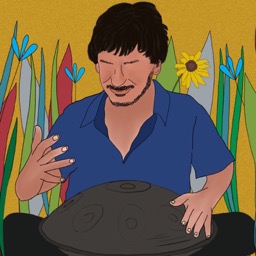
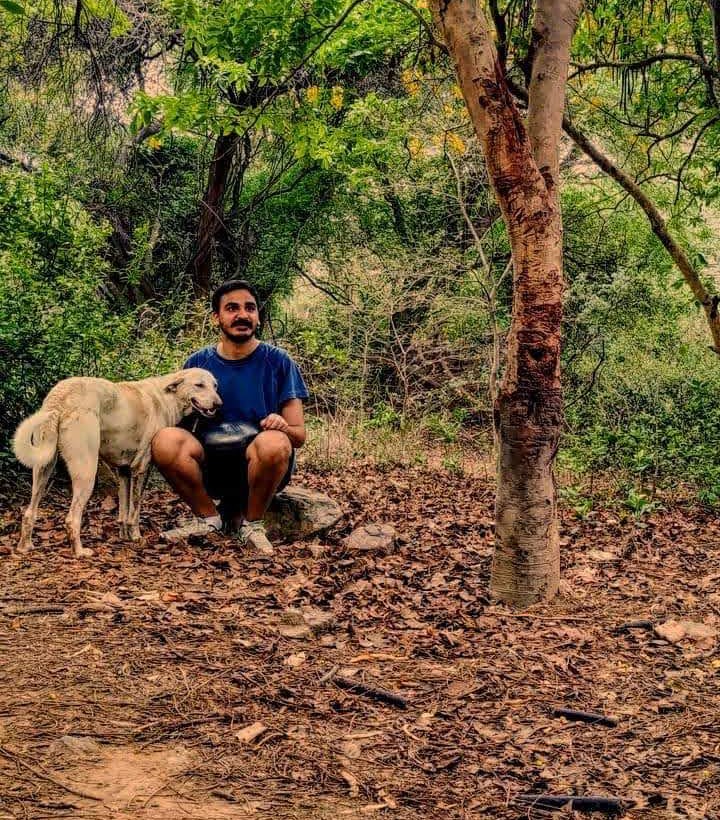
Ashim, with a friend
Invitation 05
Music and deep listening
Towards the end of the walk, everyone settles comfortably on the ground and Ashim plays the handpan for the group.
The music doesn't replace the forest; it joins it. Birds, leaves, wind and the far-off city weave in and out of the notes, and the handpan becomes one more voice in the landscape of sound.
Plays “May (Amaltas)” from Spotify. Nothing loads until you press play.
After the forest
Chai pe charcha
4–5 hoursfollowed by a shared breakfast and chai pe charcha
Each walk lasts four to five hours, and it doesn't end when the walking does. We sit down together for breakfast, chai and conversation: what people noticed, what surprised them, what they'll take home.
The food and conversation aren't an afterthought. They're where a morning spent noticing things quietly becomes a morning shared.
chai pe charcha ✿
Sitting together, talking
How it began
An evening in Central Park, a forest in Delhi
Ashim Bery is an independent musician and handpan player based in Delhi. His music has always been about listening: to the instrument, to the room, and to the places where sound happens. In the Wild grew out of that same habit of attention.
2019 · Chicago & New York
Fourteen days, seventeen countries
Ashim was selected for a 14-day US Forest Service seminar on Urban Forestry and Community Engagement, held across Chicago and New York. There were 22 participants from 17 countries, and he was one of only two from India.
One evening · Central Park, New York
A first taste of forest bathing
During the seminar, the group was introduced to forest bathing in an evening session in Central Park. It was simple and unhurried, and it stayed with him.
Back home · Sanjay Van, Delhi
Small walks in a big forest
As part of the programme's follow-up, he brought what he'd learnt back to India and began hosting small guided walks in Sanjay Van.
Over time · Across the city
Finding his own way
The walks grew into his own approach: invitations inspired by forest bathing, playful creative exercises, and, at the end, live handpan and deep listening.
So far · About ten walks
Made with others
He has led around ten walks, partnered with WWF and Swechha, and co-created experiences with dancers, musicians and mental health practitioners.
Made with others
Many ways into the forest
In the Wild isn't always led by Ashim alone. He has worked with dancers, musicians and mental health practitioners to shape different kinds of walks, and has partnered with organisations including WWF and Swechha. The forest can hold movement, sound, drawing, reflection and quiet observation.
Formats we can explore together
Nature and movement
Walking, stillness and movement shaped with dancers.
Forest sound and music
Listening, field sounds and live instruments outdoors.
Creative observation
Drawing, painting and looking closely, for any skill level.
Guided reflection
Quieter formats, designed with suitable practitioners.
Bespoke group walks
Shaped for your team, school, community or occasion.
Are you an artist, practitioner or organisation who'd like to make a walk together? Get in touch. Write to Ashim
Who it's for
Come as you are
Walks are open to people of all ages and backgrounds. One of them was a ten-year-old's birthday celebration.
All ages, one morning
Anyone curious to see Delhi's green spaces differently
Friends looking for a thoughtful morning together
People who love nature, music, art and making things
Families looking for time outdoors together
Artists and practitioners interested in working across disciplines
Organisations looking for a customised group experience
Access Not every invitation suits every age or body, and that's fine: the format can be adapted where practical. If you have access needs or questions, mention them when you get in touch so we can plan for them.
Join a walk
Ask about the next walk
There are no fixed dates listed here. Tell Ashim what you're looking for: a public walk, a private group, a family morning or a collaboration, and he'll reply with what's coming up.